Home Blog Page 8

Nigeria Shares N601bn Among Federal, States, LGs For November 2020

Nigeria Shares N601bn Among Federal, States, LGs For November 2020

The Federation Accounts Allocation Committee (FAAC) has shared a total of N601.110 billion November 2020 federation account revenue to the Federal, States and Local Government Areas.

According to a statement issued on Wednesday, the figure was announced after the Federation Account Allocation Committee (FAAC) meeting for the month of December 2020 held at the Federal Ministry of Finance headquarters, Abuja.

The meeting was chaired by the Permanent Secretary, Federal Ministry of Finance, Alhaji Aliyu Ahmed.

The total distributable revenue of N601.110 billion comprised statutory revenue of N436.457 billion; Value Added Tax (VAT) revenue of N156.786 billion and augmentation of N7.867 billion from the Forex Equalisation revenue.

The gross statutory revenue of N436.457 billion available for the month of November 2020 was higher than the N378.148 billion received in the previous month by N58.309 billion.

The gross revenue of N156.786 billion available from the Value Added Tax (VAT) was also higher than the N126.463 billion available in the previous month by N30.323 billion.

A communiqué issued by the Federation Account Allocation Committee (FAAC) indicated that from the total distributable revenue of N601.110 billion; the Federal Government received N215.600 billion, the State Governments received N171.167 billion and the Local Government Councils received N126.789 billion.

The relevant States received N31.392 billion as 13% mineral revenue, while the cost of collection, transfers, and refunds had an allocation of N56.162 billion.

The Federal Government received N190.122 billion from the gross statutory revenue of N436.457 billion; the State Governments received N96.433 billion and the Local Government Councils received N74.345 billion. N30.370 billion was given to the relevant States as 13% mineral revenue and N45.187 billion was the total cost of collection, transfers, and refunds.

The Federal Government received N21.872 billion from the Value Added Tax (VAT) revenue of N156.786 billion. The State Governments received N72.906 billion; the Local Government Councils received N51.034 billion, while the cost of collection, transfers, and refunds had an allocation of N10.975 billion.

From the N7.867 billion augmentation from the Forex Equalisation revenue, the Federal Government received N3.606 billion, the State Governments received N1.829 billion, the Local Government Councils received N1.410 billion and the relevant States received N1.022 billion as 13% mineral revenue.

According to the Communiqué, in the month of November 2020, Petroleum Profit Tax(PPT), Import Duty, Excise Duty, Value Added Tax(VAT), and Oil and Gas Royalty decreased substantially; while Companies Income Tax (CIT) recorded a sharp drop.

The balance in the Excess Crude Account (ECA) as of December 16 was $72.411 million.

Source: Channels TV

Call 0803 239 3958 for free financial consulting advice for your businesses. Attend our bi-monthly Peachtree Sage 50 accounting and reporting seminar.
Reach us or send your financial updates and articles to info@skytrendconsulting.com.

READ ALSO! Naira free fall: Parallel market not determined by demand, supply forces — CBN Governor

READ ALSO! Skytrend Consulting: Financial services and accounting solutions company

READ ALSO! Why The North Remains Headquarters Of Poverty In Nigeria — Kingsley Moghalu

READ ALSO! For failing to give out ‘adequate loans’, 12 banks fined N499bn

READ ALSO! Naira plunge: Speculators will suffer huge loss, Operators warn

READ ALSO! How To Empower Yourself And Generate Income From Mutual Funds
Nigeria’s external reserve plummets to $34.85bn, record 8-month low

Nigeria’s external reserve plummets to $34.85bn, record 8-month low

Nigeria’s foreign reserves plummeted further at $34.85 billion on December 14, as the Central Bank of Nigeria (CBN) continues its interventions across the various foreign exchange (FX) windows despite declining dollar inflows.

This is the lowest level since April when it touched $33.4 billion in the wake of the COVID-19 pandemic and falling oil prices.

Data from the CBN shows that in the last five weeks, foreign reserves fell by $805 million from $35.656 billion as of November 4, 2020.

In January this year, the nation’s reserves stood at $38.5 billion before declining to $36 billion in February and early March. It further declined to $35 billion late March, before sinking further at $33 billion in April.

It rose again following the disbursement of the $3.4 billion IMF emergency support to Nigeria to address COVI-19 pandemic, and has remained in the $36 billion region since July this year.

Nigeria’s external reserve is very crucial in defending the naira and covers the country’s huge import bills. An increasing external reserve suggests a higher inflow from crude oil earnings, foreign inflow from investors, and external loans.

Call 0803 239 3958 for free financial consulting advice for your businesses. Attend our bi-monthly Peachtree Sage 50 accounting and reporting seminar.
Reach us or send your financial updates and articles to info@skytrendconsulting.com.

READ ALSO! Naira free fall: Parallel market not determined by demand, supply forces — CBN Governor

READ ALSO! Skytrend Consulting: Financial services and accounting solutions company

READ ALSO! Why The North Remains Headquarters Of Poverty In Nigeria — Kingsley Moghalu

READ ALSO! For failing to give out ‘adequate loans’, 12 banks fined N499bn

READ ALSO! Naira plunge: Speculators will suffer huge loss, Operators warn

READ ALSO! How To Empower Yourself And Generate Income From Mutual Funds
Naira strengthens further to N470/$ at parallel market

Naira strengthens further to N470/$ at parallel market

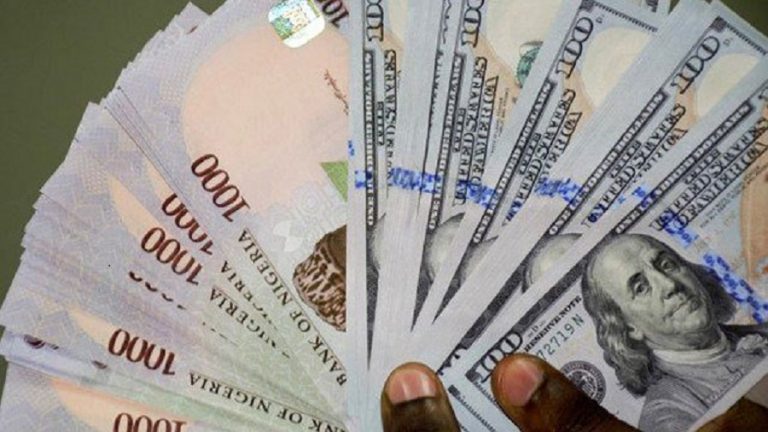
The Nigeria’ Naira continues to strengthen up as it exchanged at N470/$ on Tuesday December 15, 2020 at the parallel market.

On Monday, the currency had exchanged at N473/$ at the parallel market

The exchange rate between the naira and the British pound sterling closed at ₦615/₤1 on Tuesday, with the rate closing at ₦615/₤1 on Monday.

The exchange rate between the naira and the European euro closed at ₦565/€1 on Tuesday December 15th 2020. The rate had also closed at ₦565/€1 on Monday.

The nation’s currency started firming up after banks commenced payment of Diaspora remittances in dollars to beneficiaries as directed by the Central Bank of Nigeria (CBN).

On November 30, the CBN said beneficiaries of diaspora remittances through the international monetary transfer operators (IMTO) shall have such inflows in foreign currency (US Dollar) through the designated bank of their choice.

The Association of Bureaux De Change Operators of Nigeria (ABCON) has earlier warned that for speculators will soon suffer huge loss over their forceful depreciation of the naira through illegal activities.

Call 0803 239 3958 for free financial consulting advice for your businesses. Attend our bi-monthly Peachtree Sage 50 accounting and reporting seminar.
Reach us or send your financial updates and articles to info@skytrendconsulting.com.

READ ALSO! Naira free fall: Parallel market not determined by demand, supply forces — CBN Governor

READ ALSO! Skytrend Consulting: Financial services and accounting solutions company

READ ALSO! Why The North Remains Headquarters Of Poverty In Nigeria — Kingsley Moghalu

READ ALSO! For failing to give out ‘adequate loans’, 12 banks fined N499bn

READ ALSO! Naira plunge: Speculators will suffer huge loss, Operators warn

READ ALSO! How To Empower Yourself And Generate Income From Mutual Funds

Finance bill 2020: See details of 17 key items passed by Senate

Finance bill 2020: See details of 17 key items passed by Senate

The Senate, on Tuesday, passed the Finance Bill 2020 transmitted to the National Assembly by President Muhammadu Buhari two weeks ago.

The passage of the Bill followed the consideration of a report by the Senate Joint Committee on Finance; Customs, Excise & Tariff; Trade and Investment and Public Procurement at plenary by the upper chamber.

Chairman of the Joint Committee, Senator Solomon Adeola (Lagos West), in his presentation, said the Finance Bill 2020 specifically seeks to amend 17 key aspects of extant laws.

According to the him, they are: Capital Gains Act; Companies Income Tax Act; Industrial Development (Income Tax Relief) Act; Personal Income Tax Act; Tertiary Trust Fund Act; Customs and Excise Duties Tariff; Value Added Tax Act; Stamp Duties Act; and Electronic Transaction Levy.

Other areas amended are: Federal Inland Revenue Service (Establishment) Act; Nigeria Export Processing Zone Authority Act; Oil and Gas Export Processing Zone Act; Crisis Intervention Fund; Unclaimed Funds Trust Fund; Companies and Allied Matters Act, 2020; Fiscal Responsibility Act; and Public Procurement Act.

President Muhammadu Buhari, had in a letter dated 25th November, 2020 said the passage of the Finance Bill would support the implementation of the 2021 budget through key reforms in taxation, customs, excise, fiscal and other laws.

Read Also: INEC: Senate steps down confirmation of Buhari’s aide
The Committee among others recommended the inclusion of free duty and levy for commercial airline operators in line with presidential waivers and approval already granted by the President in the Customs and Excise Tariff Act (CETA).

On the Capital Gain Tax, according to Adeola, the Joint Committee recommended that returns should be filed per year on the 30th of June and 31st December of every Tax year.

“The Committee recommended that the deductions provided for in the Company Income Tax should among others be based on the actual cost of the in-kind donation instead of the value which may be different from what the donor actually incurred.

He added: “The Committee recommends that Section 25(9) of CITA proposed be reduced from 25% to 15% of assessable profits to reduce the amount of deductions available for this voluntary donations made to State or Local Government

“The Committee recommends penalty or fine to be disallowed should be restricted to those imposed by legislation enacted by the National Assembly or States Houses of Assembly with the aim of removing the restriction that will be occasion by the proposal in the Bill with the aim of ease of doing business.

“The Committee recommends that Section 7 of the proposed amendments be deleted and Section 8 of the proposed Bill is the new Section 7.”

On the Industrial Development Income Tax Relief (IDITRA), the Committee recommended “deduction in the Tax Relief periods from initial 5 years to 4 years and additional 3 years to 2 years as this will enable the government to start taxing the relevant organization after a total period of 6 years of tax holiday.”

On the Customs and Excise Tariff Act (CETA), the Committee recommended as follows: The “word ‘service’ be changed to telecommunication in order to be specific on the section been targeted instead of leaving it open to all of the services industries.

“The inclusion of the new duty and levy been proposed and presented at the public hearing in view of the economic hardship by the Minister of Finance and CG Custom Services in order to improve the revenue generation by the Custom Services and reduce loss of revenue to neighbouring countries.

“The inclusion of free duty and levy for commercial airline operators in line with presidential waivers and approval already granted by the President.”

On the Value Added Tax VAT), the Committee recommended that “goods and services exempted should include commercial aircraft, engine, spare part, airline transportation ticket, hire rental on lease of tractors plough and other agricultural equipment or implements should be included as parts of goods and services exempted from VAT.

On Stamp Duty, the Committee recommended that “the Minister in charge of finance subjects to the approval of the National Assembly shall make regulation for the imposition, administration, collection and remittance of the electronic levy.

“The sharing formula of the electronic levy between States and Federal Government with States Government taking 85% and Federal Government being the collecting agent on behalf of the States collects 15%.”

On the Federal Inland Revenue Establishment Act, the Committee recommended “that the service may deploy proprietary technology to automate tax administration process including tax assessment and information gathering provided it gives 30 days’ notice to the tax payer.”

On the Unclaimed Fund Trust Fund, the Committee recommended among others that, “The Debt Management Office shall – maintain a reliable database of all unclaimed dividends and dormant bank balances constituting the debt owed by the Trust Fund which shall be verified and reconciled with the Securities and Exchange Commission, and the Central Bank of Nigeria on a bi-annual basis.

“Liaise with the relevant Registrars of Companies, deposit money banks or the National Deposit Insurance Corporation, as the case may be, to make adequate arrangement for the repayment of the verified interest and capital obligations due to the relevant shareholders, depositors or their legal beneficiaries, as the case may be.

“Prepare and implement a plan for the efficient management of the obligations of the Trust Fund, which plan shall include setting guidelines, modalities and other arrangements, which may include an annual sinking fund, for the servicing of the interest and capital obligations of the Trust Fund.”

On the Fiscal Responsibility Act, the Committee recommended that “the classification of corporation operating surplus as it relates to the cost of revenue ratio and operating surplus of the Minister in charge of finance must upon the approval of the National Assembly may approve for that particular corporation.

“The balance of operating surplus paid into the Consolidated Revenue Funds and any other deductions from the Corporation account which may be effected by regulation issued by the Minister, such regulation must be approved by the National Assembly.

“The quarterly reconciliation carried out by the Ministry of Finance on the corporation, the report of this quarterly reconciliation must be forwarded to the National Assembly.”

Sourced from The Nation

Call 0803 239 3958 for free financial consulting advice for your businesses. Attend our bi-monthly Peachtree Sage 50 accounting and reporting seminar.
Reach us or send your financial updates and articles to info@skytrendconsulting.com.

READ ALSO! Naira free fall: Parallel market not determined by demand, supply forces — CBN Governor

READ ALSO! Skytrend Consulting: Financial services and accounting solutions company

READ ALSO! Why The North Remains Headquarters Of Poverty In Nigeria — Kingsley Moghalu

READ ALSO! For failing to give out ‘adequate loans’, 12 banks fined N499bn

READ ALSO! Naira plunge: Speculators will suffer huge loss, Operators warn

READ ALSO! How To Empower Yourself And Generate Income From Mutual Funds
JUST IN: Amended Finance Bill 2020 passed by Senate

JUST IN: Amended Finance Bill 2020 passed by Senate

The Senate on Tuesday passed the Federal Government’s Finance Bill 2020 transmitted to the National Assembly two weeks ago for consideration and passage.

The approval of the bill was sequel to the consideration of a report by the Senate Joint Committee on Finance, Customs, Excise & Tariff, Trade and Investment, and Public Procurement.

Chairman of the Joint Committee, Senator Solomon Adeola, in his presentation said the Finance Bill 2020 specifically sought to amend 17 key areas.

They are: Capital Gains Act; Companies Income Tax Act; Industrial Development (Income Tax Relief) Act; Personal Income Tax Act; Tertiary Trust Fund Act; Customs and Excise Duties Tariff; Value Added Tax Act; Stamp Duties Act; and Electronic Transaction Levy.

Other areas amended are: Federal Inland Revenue Service (Establishment) Act; Nigeria Export Processing Zone Authority Act; Oil and Gas Export Processing Zone Act; Crisis Intervention Fund; Unclaimed Funds Trust Fund; Companies and Allied Matters Act, 2020; Fiscal Responsibility Act; and Public Procurement Act.

The President, Major General Muhammadu Buhari, (retd.), in a letter dated 25th November, 2020, said it would support the implementation of the 2021 budget through key reforms to specific taxation, customs, excise, fiscal and other laws.

Call 0803 239 3958 for free financial consulting advice for your businesses. Attend our bi-monthly Peachtree Sage 50 accounting and reporting seminar.
Reach us or send your financial updates and articles to info@skytrendconsulting.com.

READ ALSO! Naira free fall: Parallel market not determined by demand, supply forces — CBN Governor

READ ALSO! Skytrend Consulting: Financial services and accounting solutions company

READ ALSO! Why The North Remains Headquarters Of Poverty In Nigeria — Kingsley Moghalu

READ ALSO! For failing to give out ‘adequate loans’, 12 banks fined N499bn

READ ALSO! Naira plunge: Speculators will suffer huge loss, Operators warn

READ ALSO! How To Empower Yourself And Generate Income From Mutual Funds

World Bank okays $1.5bn loan to give bite to Nigeria’s economy

World Bank okays $1.5bn loan to give bite to Nigeria’s economy

The World Bank has approved Nigeria’s request for a $1.5 billion loan. In a statement on Tuesday, the Bretton Wood institution says the facility is a 5-year country partnership framework (CPF) that will last from 2021 to 2024.

The bank said the facility was prepared jointly with the International Finance Corporation (IFC) and the Multilateral Investment Guarantee Agency (MIGA).

“This country partnership framework will guide our engagement for the next five years in supporting the government of Nigeria’s strategic priorities by taking a phased and adaptive approach,” Shubham Chaudhuri, World Bank country director for Nigeria said.

“To realize its long-term potential, the country has to make tangible progress on key challenges and pursue some bold reforms. Our engagement will focus on supporting Nigeria’s efforts to reduce poverty and promote sustained private sector-led growth.”

The loan will focus on four areas of engagement namely Investing in human capital, promoting jobs and economic transformation and diversification, enhancing resilience and strengthening the foundations of the public sector.

The bank’s board of directors also approved $1.5 billion for two projects in Nigeria.

The projects are Nigeria COVID-19 Action Recovery and Economic Stimulus – Program for Results (Nigeria CARES) and The State Fiscal Transparency, Accountability and Sustainability Program for Results (SFTAS) Additional Financing.

Both projects will get a $750 million facility through the International Development Association (IDA).

Call 0803 239 3958 for free financial consulting advice for your businesses. Attend our bi-monthly Peachtree Sage 50 accounting and reporting seminar.
Reach us or send your financial updates and articles to info@skytrendconsulting.com.


Nigeria’s inflation worsens, hits 14.89%, more Nigerians groan

Inflation rate climbs to 14.23% as food prices ascend; Nigerians groan

More Nigerians have continued to groan as prices of food commodities across the nation have continued to rise.

The climb in food prices and other individual consumption have further increased the rate of inflation to 14.89% in November 2020.

According to figures released by the National Bureau of Statistics (NBC) on Monday, the country’s inflation increased again in October, moving up by 0.52% when compared to 13.71% recorded in September.

The consumer price index (CPI) which measures inflation rose to 14.89% (year-on-year) in November 2020.

The report published Tuesday by the National Bureau of Statistics revealed (NBS) shows that price increases were recorded in all divisions that yielded the headline index.

The composite food index rose sharply by 18.30 per cent in November compared to 17.38 per cent in October. The index was 16.66 percent in September 2020.

This is 0.66 percentage points higher than the rate recorded in October 2020 (14.23 per cent).

On month-on-month basis, the headline index increased by 1.60 per cent in November 2020.

This is 0.06 percentage points higher than the rate recorded in October 2020 (1.54 per cent).

The percentage change in the average composite CPI for the twelve-month period ending November 2020 over the average of the CPI for the previous 12-month period was 12.92 per cent, representing a 0.26 percentage point increase over 12.66 per cent recorded in October 2020.

The urban inflation rate rose to 15.47 per cent (year-on-year) in November from 14.81 per cent recorded in October, while the rural inflation rate rose to 14.33 per cent in November from 13.68 per cent in October.

On a month-on-month basis, the urban index rose by 1.65 per cent in November, up by 0.05, from 1.60 per cent recorded in October, while the rural index also rose by 1.56 per cent in November, up by 0.08 from 1.48 per cent recorded in October.

Call 0803 239 3958 for free financial consulting advice for your businesses. Attend our bi-monthly Peachtree Sage 50 accounting and reporting seminar.
Reach us or send your financial updates and articles to info@skytrendconsulting.com.

READ ALSO! Naira free fall: Parallel market not determined by demand, supply forces — CBN Governor

READ ALSO! Skytrend Consulting: Financial services and accounting solutions company

READ ALSO! Why The North Remains Headquarters Of Poverty In Nigeria — Kingsley Moghalu

READ ALSO! For failing to give out ‘adequate loans’, 12 banks fined N499bn

READ ALSO! Naira plunge: Speculators will suffer huge loss, Operators warn

READ ALSO! How To Empower Yourself And Generate Income From Mutual Funds
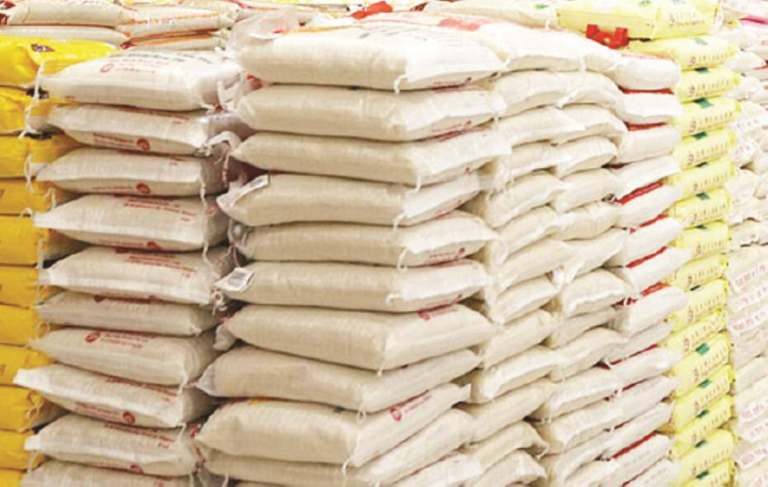
JUST IN: Lagos govt unveils sales of rice at N20,000 per bag

JUST IN: Lagos govt unveils sales of rice at N20,000 per bag

The Lagos State Government says it will begin the sales of rice before Christmas celebration to residents in collaboration with Kebbi Government and Central Bank of Nigeria (CBN).

The Commissioner for Agriculture, Ms Abisola Olusanya, told newsmen on Monday in Lagos that about 100,000 bags of 50 kg were being expected for sales at N20,000 per bag.

Her Words:

“We are intervening in the area of availability of rice for the festive season, and it will be sold at N20,000 per bag.

“The most important thing is that we have rice available, be it Lake Rice or other brands,” she said. Olusanya said that the delay in the sale was due to the process of production.

“During the festive season, millets have to be polished, mill, and processed before rice will be available.

“It’s not that rice is not available in the market, but the price points are a bit high.

“The rice has started arriving as at last week, and we are expecting much more in the next couple of days.”

Call 0803 239 3958 for free financial consulting advice for your businesses. Attend our bi-monthly Peachtree Sage 50 accounting and reporting seminar.
Reach us or send your financial updates and articles to info@skytrendconsulting.com.

READ ALSO! Naira free fall: Parallel market not determined by demand, supply forces — CBN Governor

READ ALSO! Skytrend Consulting: Financial services and accounting solutions company

READ ALSO! Why The North Remains Headquarters Of Poverty In Nigeria — Kingsley Moghalu

READ ALSO! For failing to give out ‘adequate loans’, 12 banks fined N499bn

READ ALSO! Naira plunge: Speculators will suffer huge loss, Operators warn

READ ALSO! How To Empower Yourself And Generate Income From Mutual Funds

Naira continues gain, exchanges N473/$ at parallel market

Naira continues gain, exchanges N473/$ at parallel market

The Nigeria’ Naira consolidated its gain and exchanged at N473/$ on Monday December 14, 2020 at the parallel market.

The currency had depreciated greatly in recent times, closing at a four-year low of N510 on Monday November 30, 2020.

Analysts blame illegal activities by forex speculators and dollar scarcity for the hit.

The naira however started to firm up since the Central Bank of Nigeria (CBN) relaxed the policy on foreign remittances and domiciliary accounts.

The apex bank in a statement on Monday November 30, 2020, signed by O.S. Nnaji, director of trade & exchange of CBN, said recipients of such remittances may have the option of receiving these funds in foreign currency cash or into their domiciliary account.

The CBN statement reads, “these changes are necessary to deepen the foreign exchange market, provide more liquidity and create more transparency in the administration of Diaspora remittances into Nigeria”.

The CBN had on February 23, 2020, explained that only electronic fund transfers into Domiciliary accounts can also be transferred from such accounts while cash deposits into such accounts can only be withdrawn in cash also.

Call 0803 239 3958 for free financial consulting advice for your businesses. Attend our bi-monthly Peachtree Sage 50 accounting and reporting seminar.
Reach us or send your financial updates and articles to info@skytrendconsulting.com.

READ ALSO! Naira free fall: Parallel market not determined by demand, supply forces — CBN Governor

READ ALSO! Skytrend Consulting: Financial services and accounting solutions company

READ ALSO! Why The North Remains Headquarters Of Poverty In Nigeria — Kingsley Moghalu

READ ALSO! For failing to give out ‘adequate loans’, 12 banks fined N499bn

READ ALSO! Naira plunge: Speculators will suffer huge loss, Operators warn

READ ALSO! How To Empower Yourself And Generate Income From Mutual Funds
NSE halts downward spiral as investors gain N300bn

NSE halts downward spiral as investors gain N300bn

Nigeria’s Stock Exchange (NSE) market halted its downward spiral on Monday, December 14, 2020, thanks to investors who after previous sessions of market dip saw bargain opportunities in equities like Airtel Africa Plc, Dangote Cement Plc, Guinness Nigeria Plc, and Lafarge Africa Plc.

Stock investors gained about N309billion at the close of the remote trading session which had 4,154 deals.
Equity traders exchanged 208,094,710 units of shares valued at N3.700billion.

Zenith Bank, GTBank, and Access Bank were actively traded equities on the Nigerian Stock Exchange.

The Nigerian Stock Exchange (NSE) All Share Index (ASI) rose by 1.73percent, from 34,250.74 points to 34,843.44 points while the value of listed stocks on the Bourse went up from N17.902 trillion to N18.211trillion.

Call 0803 239 3958 for free financial consulting advice for your businesses. Attend our bi-monthly Peachtree Sage 50 accounting and reporting seminar.
Reach us or send your financial updates and articles to info@skytrendconsulting.com.

READ ALSO! Naira free fall: Parallel market not determined by demand, supply forces — CBN Governor

READ ALSO! Skytrend Consulting: Financial services and accounting solutions company

READ ALSO! Why The North Remains Headquarters Of Poverty In Nigeria — Kingsley Moghalu

READ ALSO! For failing to give out ‘adequate loans’, 12 banks fined N499bn

READ ALSO! Naira plunge: Speculators will suffer huge loss, Operators warn

READ ALSO! How To Empower Yourself And Generate Income From Mutual Funds