Home Blog Page 6

As African Continental Free Trade Area takes off: prospects and challenges

As African Continental Free Trade Area takes off: prospects and challenges

African countries began officially trading under the African Continental Free Trade Area (AfCFTA) agreement on Friday, January 1, 2021, after several months of setback occasioned by the global Covid 19 pandemic.

The deal was originally scheduled to kick off on July 1, 2020, but was made impossible by Covid 19 pandemic

It was in March 2018 that African heads of state and government held an extraordinary summit in Kigali, Rwanda and agreed to establish the Free Trade Area.

Reuters, however, reports that experts view the New Year’s Day launch of the pact as largely symbolic with full implementation of the deal expected to take years.

AfCFTA aims to bring together 1.3 billion people in a $3.4 trillion economic bloc that will be the largest free trade area since the establishment of the World Trade Organization (WTO).

Supporters of the deal say it will boost trade among African neighbours while allowing the continent to develop its own value chains. The World Bank estimates it could lift tens of millions out of poverty by 2035.

The AfCFTA, according to South Africa President, Cyril Ramaphosa, will boost intra-African trade, it will promote industrialisation and competitiveness and contribute to job creation, and it will unleash regional value chains that will facilitate Africa’s meaningful integration into the global economy.

The AfCFTA will also improve the prospects of Africa as an attractive investment destination. It will help advance the empowerment of Africa’s women, by improving women’s access to trade opportunities which will in turn facilitate economic freedom for women, and expand the productive capacity of countries.

“To support this, we must strengthen women’s participation in the continental economy by ensuring there is greater public procurement earmarked for women-owned businesses. We must ensure that there is sufficient support given to women-owned SMEs and cooperatives in both local and regional economies,” the South African leader emphasised

In addition to increased trade flows both in existing and new products, the AfCFTA has the potential to generate substantial economic benefits for African countries. These benefits, according to the International Monetary Fund, include, “higher income arising from increased efficiency and productivity from improved resource allocation, higher cross-border investment flows, and technology transfers. Besides lowering import tariffs, to ensure these benefits, African countries will need to reduce other trade barriers by making more efficient their customs procedures, reducing their wide infrastructure gaps, and improving their business climates.

At the same time, policy measures should be taken to mitigate the differential impact of trade liberalisation on certain groups as resources are reallocated in the economy and activities migrate to locations with comparatively lower costs.”

The expectation is that services and goods should be flowing freely in and out of the participating countries, making the continent the biggest free trade area in the world.

The free trade initiative could create an integrated market with a total GDP of over $3 trillion, according to US think tank, Brookings Institution.

The AU says that the agreement will create the world’s largest free trade area. It also estimates that implementing AfCFTA will lead to around a 60% boost in intra-African trade by 2022.

But challenges ranging from ubiquitous red tape and poor infrastructure to the entrenched protectionism of some of its members – must be overcome if the bloc is to reach its full potential.

Supply side constraints such as the current government’s topsy-turvy macroeconomic and monetary policies as well as underdeveloped physical and institutional infrastructure remain a threat to Nigeria’s effective participation in and efficient derivation of critical trade and economic benefits from the AfCFTA. Thus, while market access is there, supply-side constraints limit the country’s ability to respond to the opportunities inherent in the AfCFTA and remain a barrier to Nigeria’s competitiveness.

The continent currently lags behind other regions of the world in terms of continental trade. According to the African Development Bank (AfDB), intra-Africa exports amount to only 16.6% of total trade.

In 2018, the African Export-Import Bank reported that only 15% of international trade by African countries takes place within the African continent. This percentage compares unfavourably with other continents such as Europe (67%), Asia (58%) and North America (48%).

In July 2019, Nigeria finally signed the AfCFTA after pulling out days before the agreement was due to be signed in March 2018. President Muhammadu Buhari said he needed further consultations in Nigeria.

Trade within Africa is dominated by trade within regional blocs and not trade between regional blocs, therefore, most trade and investment takes place close to home.

Intra-regional trade in sub-Saharan Africa is currently very concentrated, with some 66% of the regional demand for intra-regional exports accounted for by just 10 countries, including Côte d’Ivoire, the Democratic Republic of Congo, South Africa and some other Southern African countries

Tensions continue to exist between smaller and larger states across the continent when it comes to trade and market access. This is because the possible forward and backward linkages between their economies – the creation of transborder value chains – have not yet been established.

As noted by Professor Carlos Lopes of the University of Cape Town in 2018, “once studies have been done, it will be possible to establish which countries can specialise in which elements of which supply chains. For example, the South African car industry uses leather, but South Africa is not a major leather producer; but other African countries could supply the leather. So, the key is to establish these linkages. Once the agreement is ratified, the opportunities will emerge.”

For Nigeria, the prospects for increased trade across the continent represents an opportunity to expand its balance of trade as well as its balance of payment.

The country’s trade with the other countries that belong to the Economic Community of West African States (ECOWAS) remains poor—as do aggregate trade flows among all the ECOWAS member states. The vast majority of Nigeria’s exports to the ECOWAS are mineral fuel and oils, agricultural and manufacturing forming a miniscule percentage of the country’s exports to the sub-region. The figures are even more dire when it comes to trade across the wider continent.

Simply put, Nigeria is not doing much trade with other African countries and the AfCFTA represents a veritable opportunity to expand trade, grow the economy and engender development.

In August, just a few months after celebrating its signing the AfCFTA, Nigeria imposed a ban on the movement of all goods from countries with which it shares a land border: Benin, Niger and Cameroon, effectively banning all trade—import and export—with its neighbours. The border closure has impacted Nigerian consumers and exporters with traders being refused entry of goods, even those for which they have already paid customs duties, and consumers facing inflated prices of imported food products—with some products having doubled in price.

The closure of the Nigerian border went against the spirit, and the letter of the AfCFTA, and as noted in a Brookings Institution report, is “inconsistent with its 44-year long commitment to the Economic Community of West African States (ECOWAS), West Africa’s Regional Economic Community which Nigeria spearheaded in 1975, and is one of the eight building blocks of the AfCFTA. Under the ECOWAS Protocol, member states committed to the establishment of a common market, including through the liberalisation of trade by abolition, among member states, of customs duties levied on imports and exports, and the abolition, among member states, of non-tariff barriers in order to establish a free trade area…Specifically, all 15 ECOWAS countries are committed to eliminating customs duties, quotas and quantity restrictions and accord each other most favoured nation treatment.”

Call 0803 239 3958 for free financial consulting advice for your businesses. Attend our bi-monthly Peachtree Sage 50 accounting and reporting seminar.
Reach us or send your financial updates and articles to info@skytrendconsulting.com.

READ ALSO! Naira free fall: Parallel market not determined by demand, supply forces — CBN Governor

READ ALSO! Skytrend Consulting: Financial services and accounting solutions company

READ ALSO! Why The North Remains Headquarters Of Poverty In Nigeria — Kingsley Moghalu

READ ALSO! For failing to give out ‘adequate loans’, 12 banks fined N499bn

READ ALSO! Naira plunge: Speculators will suffer huge loss, Operators warn

READ ALSO! How To Empower Yourself And Generate Income From Mutual Funds
How Vietnam lifted 45m out of poverty: What Nigeria can learn

How Vietnam lifted 45m out of poverty: What Nigeria can learn

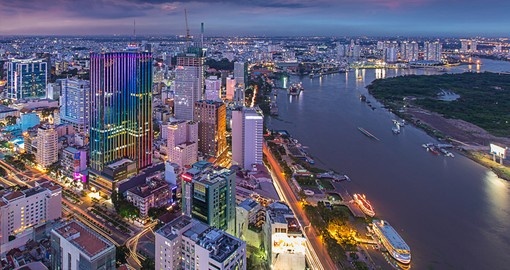
Vietnam according to 2018 World Bank report has a population of 95 million people.

However, between 2002 and 2018, the country lifted more than 45 million people out of poverty, the World Bank says.

The Southeast Asian nation became independent of France in 1945 while Nigeria was freed by Britain in 1960, but has shown the difference 15 years can make.

.On the other hand, by 2018, Nigeria had become world’s poverty capital, with six people dragged into extreme poverty every minute, according to the World Poverty Clock.

In 2019, when COVID-19 pandemic was not an issue, Nigeria’s economic growth rate stood at 2.21 percent, lower than 2.6 percent population growth rate, but Vietnam averaged 7 percent growth rate— 6 percent higher than 1 percent population growth in that country.

This meant an automatic lift of thousands out of poverty. Vietnam is one of the few countries in the world today that will not see coronavirus-induced recession due to the resilience of its economy in the last 20-30 years, said the World Bank.

In fact, the Southeast Asian nation with almost 100 million population is estimated to see up to 5 percent growth even with COVID-19 disruptions.

But Vietnam’s miracle of lifting over 45 million out of poverty in 16 years did not happen by chance. Experts at the World Bank and Brookings Institute attribute the miracle to three strategies: domestic reforms by reducing cost of doing business and deregulation; economic liberalisation (open borders), and investment in human and physical capital.

Due to business environment reforms and improvement in electricity (electricity supply has tripled in 10 years)­, the Southeast Asian nation has become a manufacturing hub to several investors, including Samsung, Intel and LG. Most of the firms produce in Vietnam and export to other parts of the world, creating millions of jobs and earning millions of dollars in foreign exchange.

In 2019 alone, 1.5 million new jobs were created by investors in Vietnam, according to the country’s Ministry of Labour, Invalids and Social Affairs—a year in which unemployment was over 23 percent in Nigeria. Vietnam’s exports in 2019 increased 8.4 percent to $264.189 billion—88 times Nigeria’s non-oil export earnings in 2018. Vietnam ranks 70th on the 2020 World Bank Doing Business while Nigeria‘s ranking is 131st.

The Asian country runs on hydro, coal, renewable energy and gas, with total installed capacity of almost 48,000 megawatts, but Nigeria with double population of Vietnam has 12,500 installed generation capacity and 4,000-5,000 distribution capacity, with hydro the main power source.

“Between 2002 and 2018, GDP per capita in Vietnam increased by 2.7 times, reaching over $2,700 in 2019, and more than 45 million people were lifted out of poverty. Poverty rates declined sharply from over 70 percent to below 6 percent ($3.2/day PPP),” the World Bank said on its 2019 report on Vietnam.

School enrolment in Vietnam was 115 percent in 2019, according to the World Bank, but 10.5 million children in Nigeria, especially in the North, are out of school, according to UNICEF, perpetuating poverty among the populace.
“Poor governance is one of the key drivers of poverty. Poor governance as manifested in corruption entails robbing the public of budgetary resources that could have been channelled into infrastructure and economic development,” said Obadiah Mailafia, economist and former central bank deputy governor, in a BusinessDay article entitled ‘Poverty Capital of the World.’

“Equally important is low economic growth and macroeconomic failure. Economic science has established a strong causal relationship between growth and poverty alleviation. Growth stimulates expansion opportunities for jobs and collective welfare,” he stated.

Nigeria has been hard done by falling oil prices since late 2014, which has reduced foreign exchange inflows. But the economy has failed to expand its manufacturing sector to export and earn huge foreign exchange to curb external risks. Crude oil still occupies 70 to 90 percent of FX, with the country managing demand for dollars rather than pushing for supply. In 2019, the share of crude oil exports in total exports stood at 76.5 percent, according to the National Bureau if Statistics (NBS). In the second quarter of 2020, crude oil and minerals accounted for 84.35 percent of total export, amounting to N1.87 trillion.

Doyin Salami, chairman, Presidential Economic Advisory Council, said at the recently concluded Nigerian Economic Summit that Nigeria must expand supply, and not manage demand in the economy.

“Where we are today in Nigeria is a mentality of poverty. We are managing demand, whereas we should be looking at expanding supply. Nigeria must increase the supply side of her economy,” Salami said.

The manufacturing sector in Nigeria is not competitive due to high cost of power, lack of logistics infrastructure, low local patronage, and low supply of finance to the sector and poor competitiveness of the port system.

“The slight improvement, notwithstanding, port related challenges are still present, particularly delay in clearance of imported raw-materials and machinery that are not locally available by manufacturers, including the associated high and unwarranted demurrage, which oftentimes slows down manufacturing operations and increases cost of production in the sector,” chief executives of 400 manufacturing firms in Nigeria, who are members of the Manufacturers Association of Nigeria (MAN), said in the first quarter of 2020. Premier ports in Apapa and Tin Can in Lagos have no scanners, causing delays and disrupting firms’ operations.

Nigeria has re-opened four land borders in readiness for the African Continental Free Trade Area (AfCFTA), but 44 items are still not allowed to access dollars in the exchange market. Vietnam’s economy won on the basis of open borders, allowing participation of all players in the free market.

Nigeria has borrowed from major global institutions, with debt stock hitting N31 trillion in the first half of 2020. PwC experts have asked the country to look at the option of selling dead assets worth up to $900 billion to reflate the economy and haul millions out of poverty. The Lagos Chamber of Commerce and Industry (LCCI) wants the government to embrace equity rather than debt.

“It is not just talking about lifting 100 million people out of poverty when you have no clear-cut plan to do so. Start the process by first removing barriers to business and investment, including incoherent monetary and fiscal policies,” an economist at one of the banks, who pleaded anonymity, said.

Culled from Business Day

Call 0803 239 3958 for free financial consulting advice for your businesses. Attend our bi-monthly Peachtree Sage 50 accounting and reporting seminar.
Reach us or send your financial updates and articles to info@skytrendconsulting.com.

READ ALSO! Naira free fall: Parallel market not determined by demand, supply forces — CBN Governor

READ ALSO! Skytrend Consulting: Financial services and accounting solutions company

READ ALSO! Why The North Remains Headquarters Of Poverty In Nigeria — Kingsley Moghalu

READ ALSO! For failing to give out ‘adequate loans’, 12 banks fined N499bn

READ ALSO! Naira plunge: Speculators will suffer huge loss, Operators warn

READ ALSO! How To Empower Yourself And Generate Income From Mutual Funds
Nigeria’s debt servicing gulps N2trn in 9 months

Nigeria’s debt servicing gulps N2trn in 9 months

Nigeria’s debt servicing has gulped close to a whopping N2trn for the first 3 quarters of the year (January to September 2020). This is according to the latest data obtained from the Debt Management Office.

The DMO had on Thursday disclosed that the nation’s total public debt stock rose by N1.21tn in the third quarter of last year to N32.22tn amid revenue shortfalls.

The debt stock is made up of the domestic and external debt stocks of the Federal Government of Nigeria, the 36 state governments and the Federal Capital Territory, the DMO said.

“The FGN, state governments and the FCT all recorded increases in their debt stock due to borrowings to enable them to respond appropriately to the COVID-19 pandemic and to meet revenue shortfalls,” the debt office said.

DMO’s data shows that the cost of servicing the nation’s total debt stock from January to September 2020 stood at N1.99tn.

A total of N1.53tn was spent on domestic debt service while $1.27bn or N467.44bn was spent on external debt service payments.

Domestic debt service gulped N609.13bn in the first quarter of 2020; N312.81bn in the second quarter, and N604.19bn in the third quarter.

External debt service payments stood at $472.57m (N170.60bn) in Q1; $287.04m (N103.62bn) in Q2, and $507.15m (N193.22bn) in Q3.

Call 0803 239 3958 for free financial consulting advice for your businesses. Attend our bi-monthly Peachtree Sage 50 accounting and reporting seminar.
Reach us or send your financial updates and articles to info@skytrendconsulting.com.

READ ALSO! Naira free fall: Parallel market not determined by demand, supply forces — CBN Governor

READ ALSO! Skytrend Consulting: Financial services and accounting solutions company

READ ALSO! Why The North Remains Headquarters Of Poverty In Nigeria — Kingsley Moghalu

READ ALSO! For failing to give out ‘adequate loans’, 12 banks fined N499bn

READ ALSO! Naira plunge: Speculators will suffer huge loss, Operators warn

READ ALSO! How To Empower Yourself And Generate Income From Mutual Funds
Paternity Controversy: FCMB vows to probe MD, Adam Nuru

Paternity Controversy: FCMB vows to probe MD, Adam Nuru

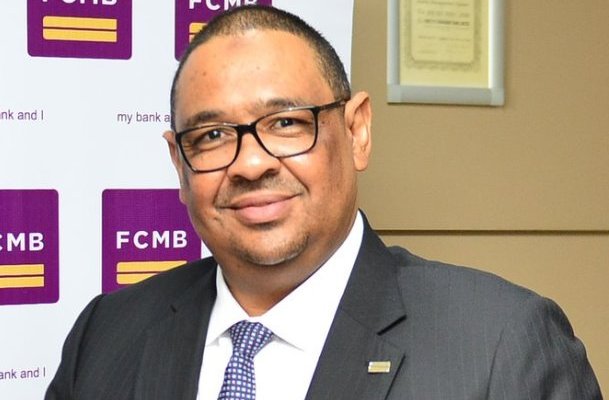
The Management of First City Monument Bank (FCMB) has vowed to probe its Managing Director, Mr Adam Nuru over a raging paternity controversy.

Over 1400 people have signed a petition asking the Central Bank of Nigeria (CBN) to sack the managing director of First City Monument Bank (FCMB), Adam Nuru.

The petition alleged that the bank chieftain was responsible for the demise of Tunde Thomas.

Mr Thomas was said to have died of depression on December 16, 2020.

According to the petition, the FCMB MD allegedly had an affair with his staff, Moyo Thomas, who was the deceased’s wife, resulting in two children.

It alleged that Moyo had informed her husband that she was leaving Nigeria for the United States with the kids only to call him upon arrival that the children do not belong to him.

The petition claimed the news initially caused Mr Thomas to be down with a stroke but later recovered and thereafter met another lady whom he planned to marry.

Mr Thomas was, however, said to have suffered a cardiac arrest after returning from work about two days before his introduction to his already pregnant girlfriend.

“Apparently, kids from his marriage to Moyo Thomas belong to his wife’s boss (Adam Nuru, the current MD of FCMB).

“Moyo Thomas left Tunde to go to America with the kids. She told him kids were not his when she got to America. He was later down with a stroke but recovered.

“Apparently, Tunde met someone else he was going to remarry but apparently didn’t recover from the first Marriage issues.

Dangote adbanner 728x90_2 (1)

“Tunde was just made director for the MFB he works for. Got back from work last week and had a cardiac arrest 2 days before introduction to a pregnant new girlfriend.

“This is a case of gross misconduct based on ethical grounds and unjustifiable economic oppression by the elites (Adam Nuru) against the less privileged in the society.

“The MD has been doing everything possible to sweep this case under the carpet. We implore the Central Bank of Nigeria as the apex regulator and the board of FCMB to investigate this for the integrity of the bank and Nigerian banking industry.

FCMB’s spokesman, Diran Olojo was contacted by Premium Times Newspaper, and he was quoted to have said the bank was reviewing the matter.

He said, ‘‘We are aware of several stories circulating across several media platforms about our bank’s Managing Director Adam Nuru, a former employee Ms Moyo Thomas and her deceased husband, Mr. Tunde Thomas.

“While this is a personal matter, the tragedy of the death of Mr. Tunde Thomas and the allegations of unethical conduct, require the bank’s board to conduct a review of what transpired, any violations of our code of ethics, and the adequacy of these code of conduct ethics. This will be done immediately.

“We enjoin all our stakeholders to bear with us as we conduct this review and to please respect the various families involved.”

Call 0803 239 3958 for free financial consulting advice for your businesses. Attend our bi-monthly Peachtree Sage 50 accounting and reporting seminar.
Reach us or send your financial updates and articles to info@skytrendconsulting.com.

READ ALSO! Naira free fall: Parallel market not determined by demand, supply forces — CBN Governor

READ ALSO! Skytrend Consulting: Financial services and accounting solutions company

READ ALSO! Why The North Remains Headquarters Of Poverty In Nigeria — Kingsley Moghalu

READ ALSO! For failing to give out ‘adequate loans’, 12 banks fined N499bn

READ ALSO! Naira plunge: Speculators will suffer huge loss, Operators warn

READ ALSO! How To Empower Yourself And Generate Income From Mutual Funds

NIN: NIMC gives fresh guidelines for applicants

NIN: NIMC gives fresh guidelines for applicants

The National Identity Management Commission, on Tuesday, issued fresh guidelines for applicants to obtain their National Identification Number.

NIMC spokesman, Kayode Adegoke, made this known in a statement titled, ‘NIMC Adopts Booking System For NIN Enrolment’.

The statement partly read, “Mindful of the second wave of the COVID-19 which continues to severely affect public health and cause unprecedented disruptions, the Commission wishes to announce that it has adopted a couple of measures to contain the spread of the virus whilst ensuring its services to Nigerians are not entirely interrupted.

“Effective December 30, 2020, attending to applicants would be based on Booking System. For Bookings, applicants are to visit any of the NIMC Offices closest to them during stipulated business hours (9am – 1pm).

“Once admitted into the office, a Number-Issuing queue management system will be in place to ensure orderliness and strict adherence to Covid-19 Protocols.”

The Commission also urged all applicants to use their face masks, observe social distancing and wash their hands while at its centres nationwide.


Call 0803 239 3958 for free financial consulting advice for your businesses. Attend our bi-monthly Peachtree Sage 50 accounting and reporting seminar.
Reach us or send your financial updates and articles to info@skytrendconsulting.com.

READ ALSO! Naira free fall: Parallel market not determined by demand, supply forces — CBN Governor

READ ALSO! Skytrend Consulting: Financial services and accounting solutions company

READ ALSO! Why The North Remains Headquarters Of Poverty In Nigeria — Kingsley Moghalu

READ ALSO! For failing to give out ‘adequate loans’, 12 banks fined N499bn

READ ALSO! Naira plunge: Speculators will suffer huge loss, Operators warn

READ ALSO! How To Empower Yourself And Generate Income From Mutual Funds
Naira strengthens at N465 as diaspora remittances hold sway

Naira strengthens at N465 as diaspora remittances hold sway

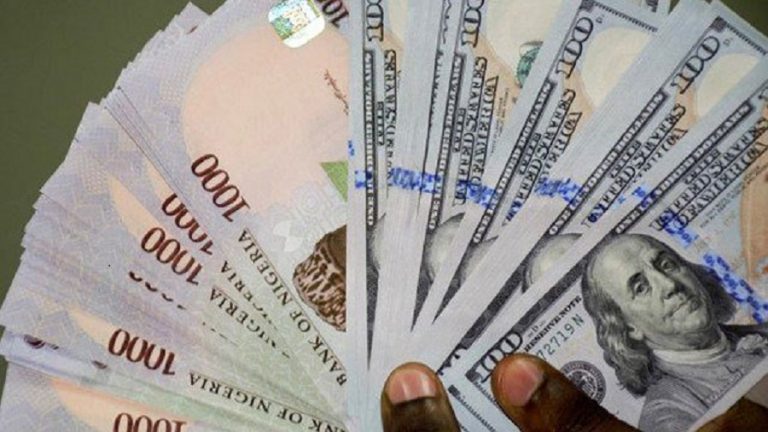
Nigeria’s Naira strengthens at N465 per United States dollar on the black market since Thursday December 24, 2020 as a result of continued supply from Diaspora remittances following recent policies by the Central Bank of Nigeria (CBN).

With the current rate, naira has gained 2.10 percent or N10.00k day-on-day against the dollar, which closed at N475 on Wednesday at the same market, data from aboki fx.com shows.

At the Bureau De Change (BDC) segment, naira has steadied at N475 since Friday, after gaining N1.00k from N474 traded on Thursday.

On November 30, the CBN said beneficiaries of diaspora remittances through the international monetary transfer operators (IMTO) would have such inflows in foreign currency (US dollar) through the designated bank of their choice.

In a statement on the same day, signed by Ozoemena Nnaji, director of trade & exchange, the CBN said recipients of such remittances may have the option of receiving these funds in foreign currency cash or into their domiciliary account.


Call 0803 239 3958 for free financial consulting advice for your businesses. Attend our bi-monthly Peachtree Sage 50 accounting and reporting seminar.
Reach us or send your financial updates and articles to info@skytrendconsulting.com.

READ ALSO! Naira free fall: Parallel market not determined by demand, supply forces — CBN Governor

READ ALSO! Skytrend Consulting: Financial services and accounting solutions company

READ ALSO! Why The North Remains Headquarters Of Poverty In Nigeria — Kingsley Moghalu

READ ALSO! For failing to give out ‘adequate loans’, 12 banks fined N499bn

READ ALSO! Naira plunge: Speculators will suffer huge loss, Operators warn

READ ALSO! How To Empower Yourself And Generate Income From Mutual Funds

FG records N235bn revenue decline in companies’ income tax

FG records N235bn revenue decline in companies’ income tax

The Federal Government has realised a revenue decline of about N235billion or 17.4% in company inccome tax for the first 3 quarters of the year, compared with the projections from the 2020 budget.

The Government had, in the budget, projected to generate N1.798 trillion in the full year and N1.348 trillion by Q3’20 from the CIT.

But a data from National Bureau of Statistics, NBS, obtained by Financial Vanguard shows that actual CIT revenue realised for the period under review was N1.113 trillion, about N235 billion or 17.4 per cent decline from the 2020 budget target.

Also economy analysts say the sustained macroeconomic headwinds would likely affect the projected CIT in the fourth quarter of 2020.

Economists and financial analysts have opined that the shortfall in income tax revenue is not unexpected in view of the covid 19 pandemic, which led to a nationwide lockdown and also a huge drop in oil price and oil revenue.

Call 0803 239 3958 for free financial consulting advice for your businesses. Attend our bi-monthly Peachtree Sage 50 accounting and reporting seminar.
Reach us or send your financial updates and articles to info@skytrendconsulting.com.

READ ALSO! Naira free fall: Parallel market not determined by demand, supply forces — CBN Governor

READ ALSO! Skytrend Consulting: Financial services and accounting solutions company

READ ALSO! Why The North Remains Headquarters Of Poverty In Nigeria — Kingsley Moghalu

READ ALSO! For failing to give out ‘adequate loans’, 12 banks fined N499bn

READ ALSO! Naira plunge: Speculators will suffer huge loss, Operators warn

READ ALSO! How To Empower Yourself And Generate Income From Mutual Funds
BDCs lobby CBN to make them diaspora remittance agents

BDCs lobby CBN to make them diaspora remittance agents

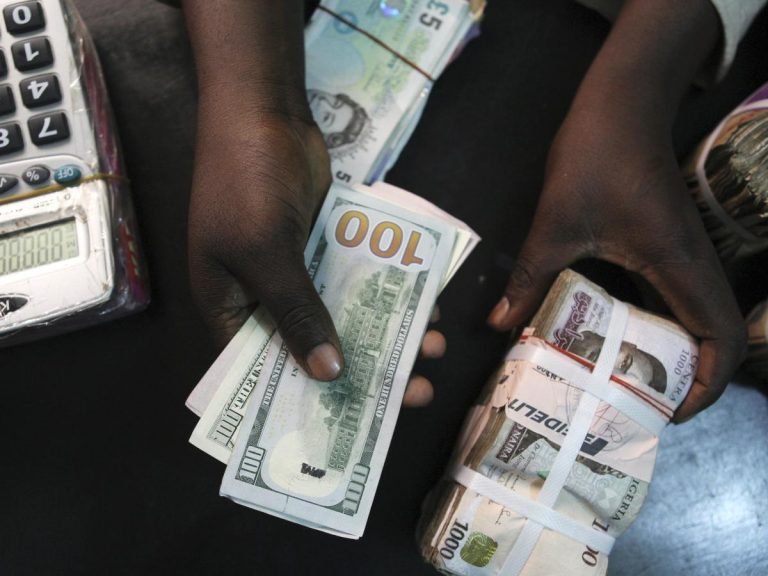
The Association of Bureaux De Change Operators of Nigeria (ABCON) is urging the Central Bank of Nigeria (CBN) to make Bureaux De Change operators (BDCs) payout agents for diaspora remittances which is close to $25bn annually.

The President, ABCON, Alhaji Aminu Gwadabe, says the apex bank should leverage the over 5,000 licensed BDCs across the country to get dollars seamlessly to beneficiaries.

He said this in a statement on Sunday titled ‘ABCON asks CBN to make BDCs payout agents for diaspora remittances’.

Gwadabe says this would help in providing a more convenient channel for Nigerians in the diaspora to remit funds back to the country to boost economic development.

He said BDCs remained the largest foreign currency operators in Nigeria, adding that making them payout agents for diaspora remittances would protect the market from forex cartel that refused to follow rules set by the apex bank.

He explained that such move would help in achieving market price equilibrium, give depth to the forex market, boost dollar liquidity in the market, enhance foreign reserves accretion and promote exchange rate stability.

Call 0803 239 3958 for free financial consulting advice for your businesses. Attend our bi-monthly Peachtree Sage 50 accounting and reporting seminar.
Reach us or send your financial updates and articles to info@skytrendconsulting.com.

READ ALSO! Naira free fall: Parallel market not determined by demand, supply forces — CBN Governor

READ ALSO! Skytrend Consulting: Financial services and accounting solutions company

READ ALSO! Why The North Remains Headquarters Of Poverty In Nigeria — Kingsley Moghalu

READ ALSO! For failing to give out ‘adequate loans’, 12 banks fined N499bn

READ ALSO! Naira plunge: Speculators will suffer huge loss, Operators warn

READ ALSO! How To Empower Yourself And Generate Income From Mutual Funds
Naira to plummet, interest rate to skyrocket, says CBN in new report

Naira to plummet, interest rate to skyrocket, says CBN in new report

Central Bank of Nigeria (CBN) has disclosed that a survey carried out by its Statistics Department revealed that the naira is expected to plummet further in January 2021.

The report, titled, ‘December 2020 Business Expectations Survey Report’ adds that there might also be a steady rise in interest rate from December till the next six months.

The naira witnessed a sharp fall in recent weeks, reaching its lowest on November 30, 2020, when it exchanged for N500/$1. Since then, the dollar has been hovering between N460 and N470. As of Friday, however, one dollar exchanged for 465 in the parallel market.

Also, the Nigerian economy had on November 21 slid into its second recession in five years when the economy shrank again in the third quarter.

The recession is said to be the worst in 36 years, according to the data obtained from the World Bank. The Federal Government and some economists had expressed optimism that the country would exit the recession in 2021.

Call 0803 239 3958 for free financial consulting advice for your businesses. Attend our bi-monthly Peachtree Sage 50 accounting and reporting seminar.
Reach us or send your financial updates and articles to info@skytrendconsulting.com.

READ ALSO! Naira free fall: Parallel market not determined by demand, supply forces — CBN Governor

READ ALSO! Skytrend Consulting: Financial services and accounting solutions company

READ ALSO! Why The North Remains Headquarters Of Poverty In Nigeria — Kingsley Moghalu

READ ALSO! For failing to give out ‘adequate loans’, 12 banks fined N499bn

READ ALSO! Naira plunge: Speculators will suffer huge loss, Operators warn

READ ALSO! How To Empower Yourself And Generate Income From Mutual Funds
Small businesses in Lagos suffer loss of N2.7bn during covid-19 lockdown

Small businesses in Lagos suffer loss of N2.7bn during covid-19 lockdown

The Lagos Chamber of Commerce and Industry says losses of Micro, Small and Medium Enterprises (MSMEs) in Lagos is about N2.7 billion, due to the recent Coronavirus lockdown.

LCCI’s Director-General, Dr Muda Yusuf, made this known on Sunday through the LCCI’s Economic and Business Review for 2020 and Outlook for 2021.

Yusuf further attributed the development to two major disruptions of COVID-19 and the EndSARS protests, experienced by businesses operating within the Lagos metropolis.

He added that the sharp Naira exchange rate depreciation coupled with sustained acceleration in domestic prices escalated both costs of production and operation for investors in the economy.

“The business community witnessed two major disruptions in year 2020 – COVID-19 pandemic and EndSARS protest nationwide.

“Our findings showed that MSMEs with active presence in Lagos lost at least N2.7 billion in revenue to the lockdown.

Call 0803 239 3958 for free financial consulting advice for your businesses. Attend our bi-monthly Peachtree Sage 50 accounting and reporting seminar.
Reach us or send your financial updates and articles to info@skytrendconsulting.com.

READ ALSO! Naira free fall: Parallel market not determined by demand, supply forces — CBN Governor

READ ALSO! Skytrend Consulting: Financial services and accounting solutions company

READ ALSO! Why The North Remains Headquarters Of Poverty In Nigeria — Kingsley Moghalu

READ ALSO! For failing to give out ‘adequate loans’, 12 banks fined N499bn

READ ALSO! Naira plunge: Speculators will suffer huge loss, Operators warn

READ ALSO! How To Empower Yourself And Generate Income From Mutual Funds